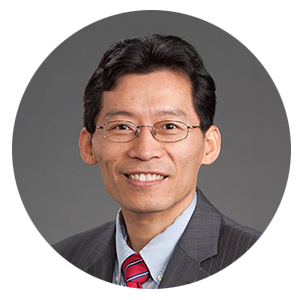
Director of Prostate Cancer Research and the Fred and Janet Sanfilippo Distinguished Professor in the Department of Pathology at Duke University School of Medicine.
Dr. Hui-Kuan Lin is a distinguished cancer biologist whose research has significantly advanced understanding of cancer signaling, metabolism, immunity, and therapeutic development. Born in Taiwan in 1971, he earned his bachelor's and master's degrees from National Taiwan University and completed his Ph.D. in cancer biology at University of Rochester in 2002. He subsequently conducted postdoctoral training at Memorial Sloan Kettering Cancer Center.
Dr. Lin currently serves as Director of Prostate Cancer Research and the Fred and Janet Sanfilippo Distinguished Professor in the Department of Pathology at Duke University School of Medicine. Previously, he held leadership positions at Wake Forest University School of Medicine and was a faculty member, Research Trust Scholar, and R. Lee Clark Fellow at The University of Texas MD Anderson Cancer Center.
His laboratory has made several landmark discoveries, including:
Identification of Akt methylation and K63-linked ubiquitination as critical mechanisms regulating Akt activation (Nature Cell Biology, 2019; Science, 2009; Cell, 2012).
Demonstration of the essential oncogenic role of the Skp2 E3 ubiquitin ligase in various cancers (Nature, 2009; Nature Cell Biology 2009 and 2010, Molecular Cell, 2015) and development of the first Skp2-SCF inhibitor with potent antitumor activity (Cell, 2013).
Creation of the first genetic model with activated mitophagy, enabling investigation of mitochondrial quality control in cancer and immunity (Nature Immunology, 2018).
Discovery of novel metabolite-sensing pathways linking cancer metabolism to innate immune regulation including lactate, inositol and glucose (Cell, 2019; Molecular Cell, 2021; Journal of Experimental Medicine, 2024; Cell Metabolism, 2023).
Identification of SIRPG as a novel cancer stem cell factor and phagocytosis suppressor in non-small-cell lung cancer through YAP activation (Journal of Clinical investigation, 2023).
Identification of ALDH4A1 as an essential component of mitochondrial pyruvate transport for TCA cycle entry and tumor suppression (Nature Cell Biology, 2025)
Elucidation of cellular uptake mechanisms for PROTAC therapeutics, advancing targeted protein degradation technology (Cell, 2025).
Dr. Lin has published more than 140 peer-reviewed papers in leading journals, such as Nature, Science, Cell, and Nature Cell Biology and Nature Immunology. His work has earned numerous honors, including election as a Fellow of the American Association for the Advancement of Science and as an Academician of Academia Sinica.
His research focuses on how post-translational modifications and metabolic signaling regulate cancer progression and immune responses, with the goal of translating fundamental biological discoveries into new therapeutic strategies for cancer treatment and overcoming drug resistance.
Description of the lab focus/projects
Crosstalk between oncogenic and tumor suppressor networks
Cancer progression and metastasis
Biology of normal and cancer stem cells.
Metabolism in cancer and ageing
We used conditional genetic Pten knockout mice to model how metabolism impacts on prostate cancer progression and metastasis.